Postpartum Recovery in Charleston, SC — Chiropractic Care, Wellness & What New Mothers Need to Know

Updated: Aug 31
By Dr. Varya Kononov, DC | The Retreat Chiropractic & Wellness | Charleston, SC

The weeks and months after giving birth are often described as one of life's most beautiful seasons and one of its most physically and emotionally demanding. Postpartum recovery is rarely straightforward. Your body has just accomplished something extraordinary, and it deserves intentional, personalized support as it heals, rebalances, and rebuilds.
At The Retreat Chiropractic & Wellness in Charleston, SC, Dr. Varya Kononov specializes in postpartum chiropractic care and wellness helping new mothers across Mount Pleasant, Daniel Island, James Island, Johns Island, West Ashley, and Downtown Charleston recover with greater ease, comfort, and confidence.
What Is Postpartum Recovery and Why Does It Matter?
Postpartum recovery refers to the physical, hormonal, and emotional healing process that begins immediately after childbirth and continues for weeks, months, and — in some ways — years. Whether you delivered vaginally or via cesarean, your body underwent significant structural and physiological change, and recovery looks different for every mother.
Common postpartum physical experiences include:
Lower back and pelvic pain lingering after delivery
Sacroiliac (SI) joint instability from hormonal ligament laxity
Postpartum sciatica nerve pain that persists after birth
Neck, shoulder, and upper back tension from feeding and carrying positions
Pelvic floor dysfunction and core weakness
General fatigue and reduced mobility
The goal of postpartum wellness is not simply to return to a pre-pregnancy baseline. it is to help your body find a stronger, more balanced, and fully supported new normal.
How Long Does It Take to Recover After Childbirth?
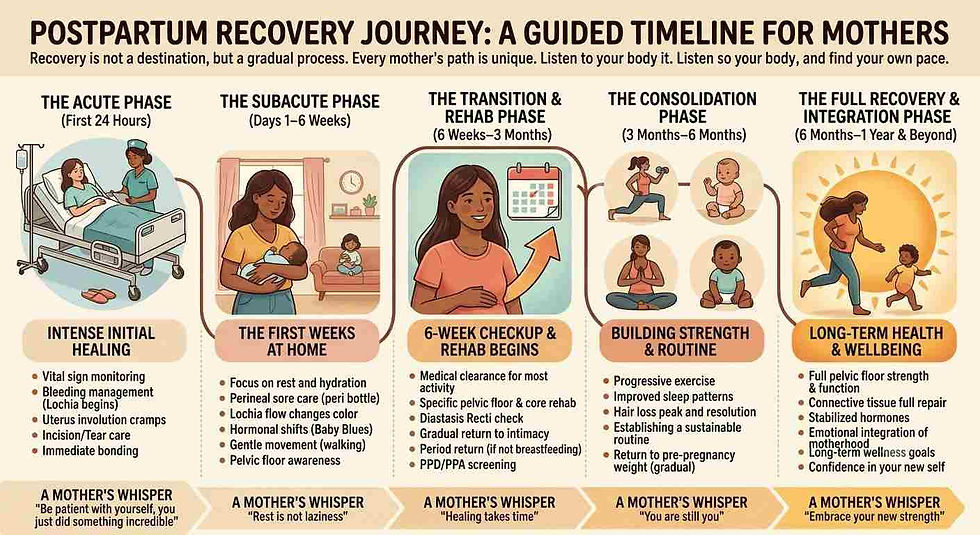
The commonly cited postpartum recovery timeline suggests six weeks for initial physical healing particularly for vaginal deliveries. However, complete postpartum recovery is far more nuanced:
0 to 6 Weeks: The acute recovery phase. Tissue healing, uterine involution, and hormonal fluctuation are at their peak. Rest is essential.
6 to 12 Weeks: Most providers clear patients for general activity. This is an excellent window to begin postpartum chiropractic care, targeted exercises, and nutritional support.
3 to 6 Months: Deep structural recovery continues. Ligament laxity from relaxin hormone gradually resolves. Pelvic floor rehabilitation and spinal realignment produce the most meaningful outcomes during this window.
6 to 12 Months and Beyond: Full recovery — including core strength, hormonal stabilization, and spinal integrity — can take up to a year or longer, particularly after cesarean birth.
Understanding this timeline helps set realistic expectations and guides the right care at the right time.
Postpartum Chiropractic Care — How It Supports Your Recovery

How Can Chiropractic Care Help During Postpartum Recovery?
Postpartum chiropractic care addresses the structural changes your body experienced during pregnancy and delivery. The pelvis, sacrum, and lumbar spine often remain in a shifted or strained position after birth and without targeted realignment, these imbalances can persist for months.
Dr. Varya Kononov uses a root-cause approach to postpartum chiropractic therapy, assessing the full picture of your recovery before recommending a personalized care plan. Treatment typically focuses on:
Restoring sacral and pelvic alignment after the demands of labor and delivery
Addressing lumbar and thoracic spinal restrictions from carrying and nursing
Reducing nerve tension driving postpartum sciatica
Supporting the body's transition as relaxin levels normalize and ligament stability returns
Integrating with pelvic floor rehabilitation for a more complete recovery
Can Chiropractic Care Relieve Postpartum Back Pain?
Yes postpartum back pain is one of the most common reasons new mothers seek postpartum chiropractic care. The lower back absorbs significant stress during pregnancy, labor, and the early postpartum period (bending, lifting, feeding). Chiropractic adjustments directly address the spinal misalignments and joint restrictions driving this pain — providing relief that is structural and lasting, not just symptomatic.
Does Chiropractic Care Help with Pelvic Pain After Childbirth?
Pelvic pain after childbirth — including SI joint dysfunction, symphysis pubis discomfort, and general pelvic instability — responds exceptionally well to chiropractic care. By restoring proper sacral and pelvic alignment, Dr. Kononov helps reduce the asymmetry and joint stress that drive postpartum pelvic pain.
Can Chiropractic Care Help with Sciatica After Pregnancy?
Yes. Postpartum sciatica — nerve pain from the lower back through the buttock and leg is frequently driven by lumbar disc pressure or piriformis muscle tension that persisted from pregnancy. Chiropractic adjustments decompress the affected spinal segments and release surrounding muscle tension, often producing significant sciatic relief within a few sessions.
Can Chiropractic Adjustments Improve Postpartum Mobility?
Absolutely. Many new mothers experience stiffness, restricted range of motion, and a general sense of physical disconnection in the weeks after birth. Postpartum chiropractic adjustments restore spinal and joint mobility, improve nervous system function, and help the body move more freely and comfortably — supporting an active return to daily life.
Postpartum Recovery Tips — Beyond Chiropractic Care
A complete postpartum recovery plan includes more than spinal adjustments. Dr. Kononov takes a whole-body approach to postpartum wellness, guiding patients through several complementary recovery strategies:
Postpartum Recovery Exercises
Movement is one of the most powerful tools for postpartum healing but the right movement matters. Early postpartum exercises that support recovery include:
Diaphragmatic breathing — reconnects the core and pelvic floor from within
Gentle pelvic tilts — restores lumbar mobility without loading the spine
Glute bridges — rebuilds posterior chain strength gently
Cat-cow stretches — improves thoracic and lumbar mobility
Walking — the safest and most universally beneficial early postpartum activity
Avoid high-impact exercise, heavy lifting, and intense core work until cleared by your healthcare provider and until pelvic floor function has been assessed.
Postpartum Recovery Foods
Nutrition plays a critical role in postpartum recovery. Key nutritional priorities include:
Protein — essential for tissue repair, muscle rebuilding, and sustained energy
Iron-rich foods — replenishing stores after blood loss during delivery
Omega-3 fatty acids — anti-inflammatory and supportive of mood and brain health
Calcium and Vitamin D — bone health, particularly important for breastfeeding mothers
Hydration — supports milk production, joint health, and metabolic recovery
Postpartum Recovery Supplements
Common supplements that may support postpartum recovery include:
Postnatal multivitamin — covering nutritional gaps during a high-demand period
Omega-3 (DHA/EPA) — supports mood, brain health, and inflammation management
Magnesium — aids muscle relaxation, sleep quality, and nervous system function
Vitamin D3 — immune function and bone support
Probiotics — gut health, immunity, and mood connection
Always consult with a healthcare provider before beginning any new supplement regimen postpartum.
Postpartum Depression — When to Seek Support
Postpartum depression (PPD) affects approximately 1 in 5 new mothers and is a medical condition requiring professional support not a reflection of strength, capability, or love for your baby.
Symptoms of PPD include persistent sadness, anxiety, difficulty bonding, sleep disruption beyond normal newborn demands, and loss of interest in daily activities. If you or someone you know is experiencing these symptoms, please reach out to a healthcare provider immediately.
While chiropractic care supports the nervous system and may contribute to improved mood through reduced physical stress and pain, it is not a treatment for clinical postpartum depression. Proper mental health support therapy, medication, community is essential.
Postpartum Recovery Benefits of Chiropractic & Wellness Therapy

The benefits of postpartum chiropractic care extend well beyond back pain:
Structural recovery — realigning the spine and pelvis after the demands of labor
Reduced pain — addressing back pain, pelvic pain, neck tension, and sciatica
Improved mobility — restoring joint function and range of motion
Nervous system support — enhancing the body's ability to regulate and recover
Better sleep quality — reduced pain leads directly to better rest
Faster overall recovery — when structural imbalances are addressed early
Emotional wellbeing — reduced physical discomfort supports mental resilience
Breastfeeding support — neck and upper back adjustments can ease nursing posture strain
Long-term spinal health — establishing a strong foundation for the years ahead
Serving Postpartum Mothers Across the Greater Charleston Area
The Retreat Chiropractic & Wellness is located at 22 Westedge St., Suite 103 in Charleston, SC — conveniently accessible for new mothers throughout the Lowcountry. Dr. Varya Kononov proudly provides postpartum chiropractic care and wellness support to patients from:
Mount Pleasant — a short drive across the Ravenel Bridge, many Mount Pleasant mothers choose The Retreat for its boutique, one-on-one approach to postpartum recovery.
Daniel Island — families from Daniel Island appreciate the intentional, unhurried care model that fits the demands of new parenthood.
James Island — James Island mothers find The Retreat easily accessible via the James Island Connector, making consistent postpartum care simple to maintain.
Johns Island — as one of Charleston's fastest-growing communities, Johns Island families regularly make the short drive for specialized postpartum chiropractic and wellness care.
West Ashley — West Ashley patients benefit from convenient access to Dr. Kononov's root-cause postpartum chiropractic approach.
Downtown Charleston — peninsula residents and downtown families are steps away from The Retreat's boutique studio at Westedge St.
Wherever you are in the Lowcountry, postpartum chiropractic care near you is closer than you think.
Frequently Asked Questions About Postpartum Recovery & Chiropractic Care
When Should You See a Postpartum Chiropractor?
The right time to begin postpartum chiropractic care depends on your delivery type and recovery progress. For vaginal births, gentle care can often begin within a few days to two weeks after delivery. For cesarean births, most practitioners recommend waiting four to six weeks and receiving clearance from your OB. The earlier structural imbalances are addressed, the more effectively the body can recover.
Is Chiropractic Care Safe After Pregnancy?
Yes postpartum chiropractic care is safe when performed by a trained practitioner who understands the postpartum body. Adjustments are modified to account for ongoing ligament laxity, cesarean incision healing (if applicable), and the specific demands of the early postpartum period. At The Retreat, Dr. Kononov conducts a thorough assessment before any treatment to ensure care is appropriate and safe.
How Can Chiropractic Care Help During Postpartum Recovery?
Postpartum chiropractic care restores spinal and pelvic alignment after the structural changes of pregnancy and delivery, reduces back and pelvic pain, addresses sciatica and nerve tension, and supports the nervous system's regulation during a demanding recovery period. It works best as part of a comprehensive postpartum wellness plan that also includes nutrition, exercise, rest, and — where needed — mental health support.
Can Chiropractic Care Relieve Postpartum Back Pain?
Yes postpartum back pain responds very well to chiropractic adjustments. By identifying and correcting the specific spinal and sacral misalignments driving the pain, chiropractic care provides structural relief that is lasting rather than symptomatic.
Does Chiropractic Care Help with Pelvic Pain After Childbirth?
Yes. Postpartum pelvic pain including SI joint dysfunction, symphysis pubis discomfort, and general pelvic instability — responds well to gentle sacral and pelvic chiropractic adjustments. Many patients report significant improvement in pelvic comfort and stability after just a few sessions.
How Soon After Giving Birth Can You Visit a Chiropractor?
For vaginal deliveries, many patients begin postpartum chiropractic care within one to two weeks of delivery. For cesarean births, four to six weeks is the general guideline, with OB clearance recommended. Dr. Kononov assesses each patient individually and tailors the timing and approach to their specific recovery status.
Can Chiropractic Care Help with Sciatica After Pregnancy?
Yes. Postpartum sciatica is common and often driven by lumbar disc pressure or piriformis muscle tension that developed or worsened during pregnancy. Chiropractic adjustments address the root cause of nerve compression, providing relief that medication alone cannot achieve.
What Are the Benefits of Postpartum Chiropractic Care?
Key benefits include structural recovery through spinal and pelvic realignment, relief from back pain, pelvic pain, and sciatica, improved joint mobility, nervous system support, better sleep quality, breastfeeding posture support, and an overall faster and more complete postpartum recovery.
Can Chiropractic Adjustments Improve Postpartum Mobility?
Yes — many new mothers experience stiffness and restricted movement after birth. Postpartum chiropractic adjustments restore spinal and joint range of motion, helping patients move more comfortably and confidently in the weeks and months following delivery.
How Long Does It Take to Recover After Childbirth?
Initial physical recovery takes approximately six weeks, though complete postpartum recovery including hormonal stabilization, core strength rebuilding, and spinal realignment — can take six to twelve months or longer. Beginning structured chiropractic care and wellness support within the first few weeks produces the best long-term outcomes.
Book Your Postpartum Recovery Appointment at The Retreat
If you are ready to support your body's postpartum recovery with intentional, personalized chiropractic care, The Retreat is here for you — wherever you are in the Lowcountry.
📞 (843) 628-3319 🌐 Book Your Postpartum Appointment
You gave your body to something extraordinary. Now let us help it heal.
About the Author
Dr. Varya Kononov, DC is the founder of The Retreat Chiropractic & Wellness in Charleston, SC a boutique chiropractic studio built on the belief that exceptional care should be intentional, personal, and never rushed. Dr. Kononov holds ICPA certification in the Webster Technique and specializes in prenatal and postpartum chiropractic care, whole-body red light therapy, and root-cause wellness for families across the greater Charleston area, including Mount Pleasant, Daniel Island, James Island, Johns Island, West Ashley, and Downtown Charleston.
With a philosophy rooted in understanding the whole person not just the presenting symptom Dr. Kononov has supported countless mothers through pregnancy, birth, and postpartum recovery with the kind of unhurried, thoughtful care that makes a lasting difference.
Comments